Types of Glaucoma
Types of Glaucoma: Understanding the Different Forms of This Silent Vision Thief
Introduction
Glaucoma is one of the leading causes of irreversible blindness worldwide. Often called the silent thief of sight, glaucoma damages the optic nerve and can permanently affect vision if left untreated. Understanding the Types of Glaucoma helps patients recognize symptoms early and receive timely treatment.
At Mansarovar Eye Hospital, our experienced ophthalmologists provide advanced glaucoma screening, diagnosis, and personalized treatment to protect your eyesight. Early detection of the Glaucoma is the best way to preserve healthy vision.
What Are the Types of Glaucoma?
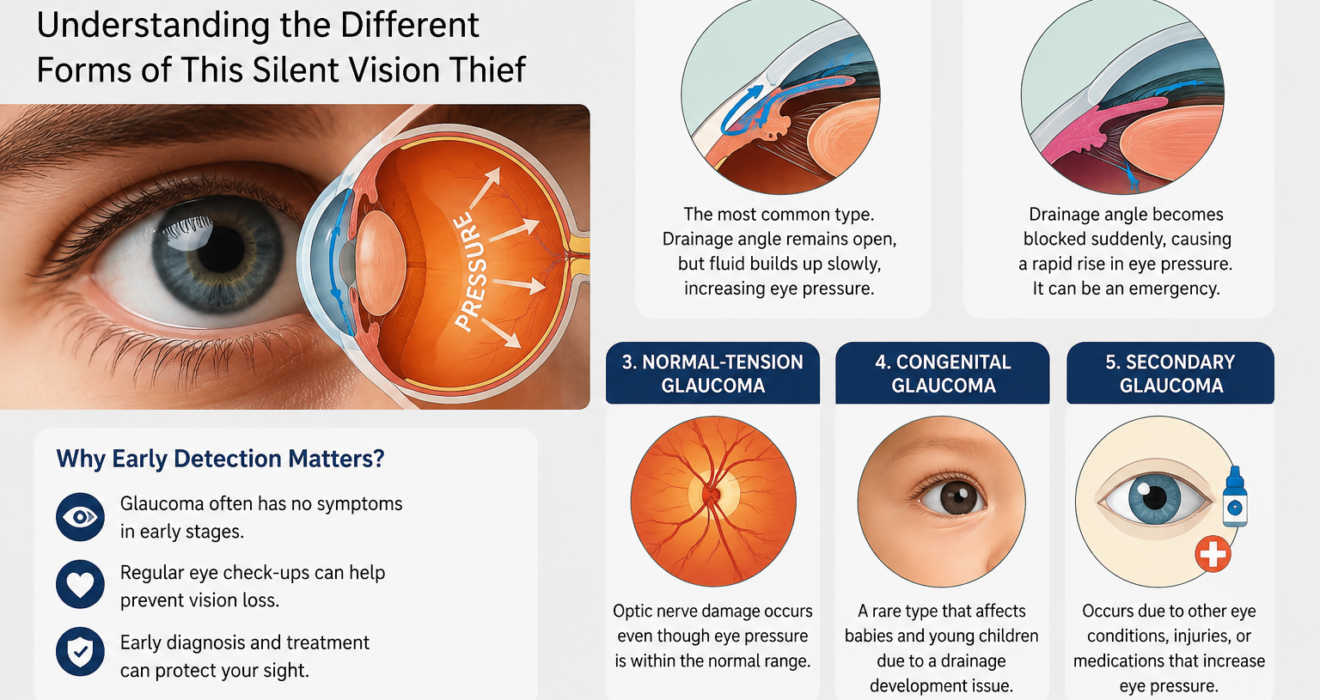
The Glaucoma refer to different forms of optic nerve disease that develop due to increased eye pressure or other underlying causes. Each condition affects the eyes differently and requires an individualized treatment plan.
The major Type of Glaucoma include:
- Primary Open-Angle Glaucoma
- Angle-Closure Glaucoma
- Normal-Tension Glaucoma
- Secondary Glaucoma
- Congenital Glaucoma
- Pigmentary Glaucoma
At Mansarovar Eye Hospital, we diagnose every type using advanced eye imaging and glaucoma testing.
Common Type of Glaucoma
Primary Open-Angle Glaucoma
Primary Open-Angle Glaucoma is the most common among all Type of Glaucoma. It develops slowly as the eye’s drainage system becomes less efficient.
Symptoms
- Gradual peripheral vision loss
- No pain
- Slow disease progression
- Late noticeable vision changes
Regular eye examinations at Mansarovar Eye Hospital help detect this condition before permanent vision loss occurs.
Angle-Closure Glaucoma
Among the serious Type of Glaucoma, Angle-Closure Glaucoma develops suddenly when the eye’s drainage angle becomes blocked.
Symptoms
- Severe eye pain
- Blurred vision
- Headache
- Nausea
- Halos around lights
Immediate treatment at Mansarovar Eye Hospital can help save vision during this emergency.
Normal-Tension Glaucoma
Normal-Tension Glaucoma is one of the Types of Glaucoma where optic nerve damage occurs despite normal eye pressure.
Risk Factors
- Family history
- Poor blood circulation
- Migraine
- Cardiovascular disease
Our glaucoma specialists use advanced optic nerve imaging for early diagnosis.
Secondary Glaucoma
Secondary Glaucoma is another important category of the Types of Glaucoma. It develops because of another eye disease, injury, or medication.
Common Causes
- Eye injury
- Steroid medication
- Eye inflammation
- Advanced cataract
- Diabetic eye disease
Treating both the underlying disease and glaucoma helps preserve vision.
Congenital Glaucoma
Congenital Glaucoma is one of the rare Type of Glaucoma affecting infants due to abnormal eye development.
Symptoms
- Excessive tearing
- Light sensitivity
- Enlarged eyes
- Cloudy cornea
Early diagnosis offers the best treatment outcomes.
Pigmentary Glaucoma
Pigmentary Glaucoma is among the less common Type of Glaucoma. It occurs when pigment particles block the drainage channels inside the eye.
Symptoms
- Blurred vision
- Eye discomfort
- Increased eye pressure
- Gradual vision loss
Regular monitoring helps prevent optic nerve damage.
Why Early Diagnosis of Types of Glaucoma Matters
Most Type of Glaucoma develop without noticeable symptoms during the early stages. Once vision is lost, it cannot be restored.
At Mansarovar Eye Hospital, comprehensive glaucoma evaluation includes:
- Eye pressure measurement
- Optic nerve examination
- OCT Scan
- Visual Field Test
- Gonioscopy
- Complete eye examination
Early diagnosis allows timely treatment and long-term vision protection.
Types of Glaucoma Treatment at Mansarovar Eye Hospital
The treatment for the Type of Glaucoma depends on the severity and condition of each patient.
Our treatment options include:
- Prescription eye drops
- Laser glaucoma treatment
- Minimally invasive glaucoma surgery (MIGS)
- Advanced glaucoma surgery
- Regular glaucoma monitoring
At Mansarovar Eye Hospital, every patient receives a customized treatment plan designed to preserve vision and improve quality of life.
Why Choose Mansarovar Eye Hospital?
Patients trust Mansarovar Eye Hospital because we provide:
- Experienced glaucoma specialists
- Advanced diagnostic technology
- Personalized treatment plans
- Modern eye care facilities
- Comprehensive glaucoma screening
- Patient-focused care
Our mission is to detect glaucoma early and protect every patient’s eyesight.
Conclusion
Understanding the Types of Glaucoma is the first step toward preventing permanent vision loss. Regular eye examinations, early diagnosis, and expert treatment significantly improve long-term eye health.
At Mansarovar Eye Hospital, we specialize in diagnosing all Types of Glaucoma using advanced technology and evidence-based treatment. If you are over 40, have diabetes, high eye pressure, or a family history of glaucoma, schedule a comprehensive eye examination today.
Protect your vision with trusted glaucoma care at Mansarovar Eye Hospital.
Frequently Asked Questions About Types of Glaucoma
What are the main Types of Glaucoma?
The major Types of Glaucoma include Primary Open-Angle Glaucoma, Angle-Closure Glaucoma, Normal-Tension Glaucoma, Secondary Glaucoma, Congenital Glaucoma, and Pigmentary Glaucoma.
Which Types of Glaucoma are most common?
Primary Open-Angle Glaucoma is the most common and usually develops slowly without early symptoms.
Can the Types of Glaucoma be treated?
Yes. Although glaucoma cannot be cured, early diagnosis and appropriate treatment can effectively control disease progression and preserve vision.
Why should I choose Mansarovar Eye Hospital?
Mansarovar Eye Hospital offers advanced glaucoma diagnosis, modern treatment options, experienced ophthalmologists, and personalized care for every patient.