
LASIK and Refractive Surgeries
Clear vision plays an important role in everyday life, whether you are working on a computer, driving, studying, playing sports, or simply enjoying your daily activities. For people who depend on spectacles or contact lenses because of refractive errors, LASIK and other refractive surgeries may offer an alternative to vision correction through glasses or contact lenses.
Mansarovar Eye Hospital provides comprehensive eye care and evaluation for patients considering laser vision correction and other refractive surgery options.
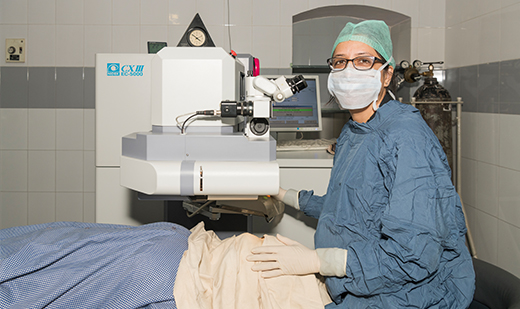
Our approach focuses on detailed eye assessment, understanding the patient's visual requirements, evaluating suitability for a procedure, and providing appropriate guidance based on individual eye health.
What are Refractive Errors
Refractive errors occur when the eye does not focus light precisely on the retina, resulting in blurred or unclear vision. They are among the most common causes of vision problems and can generally be corrected with spectacles, contact lenses, or, for suitable patients, refractive surgery.
Common refractive errors include:
- Myopia (short-sightedness): Distant objects may appear blurred while close objects can be seen more clearly.
- Hypermetropia (long-sightedness): Near vision may be more difficult, although the effect varies depending on age and the degree of refractive error.
- Astigmatism: Irregular curvature of the cornea or other optical structures can cause blurred or distorted vision at different distances.
- Presbyopia: An age-related reduction in the eye's ability to focus on nearby objects. LASIK and other procedures may be considered in selected cases, depending on individual requirements.
A comprehensive eye examination is essential before deciding whether refractive surgery is appropriate.
What Is LASIK?
LASIK (Laser-Assisted in Situ Keratomileusis) is a type of laser refractive surgery designed to change the shape of the cornea so that incoming light can be focused more accurately on the retina.
During LASIK, a surgeon creates a thin corneal flap, uses a laser to reshape the underlying corneal tissue according to the patient's correction, and then repositions the flap. The procedure is performed using precise measurements obtained during the pre-operative evaluation.
LASIK has been used for the correction of selected cases of myopia, hypermetropia, and astigmatism. However, not every person with a refractive error is necessarily a suitable candidate. Factors such as corneal thickness and shape, eye health, refractive stability, tear-film health, age, and individual expectations may all be considered.
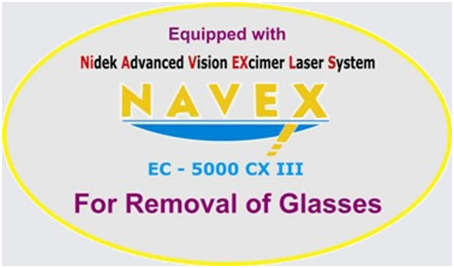
LASIK Evaluation at Mansarovar Eye Hospital
Choosing laser vision correction should begin with a thorough eye examination rather than simply selecting a procedure. At Mansarovar Eye Hospital, patients can undergo an assessment to help determine their refractive status and overall suitability for refractive surgery.
Depending on the patient's condition, an evaluation may include:
- Detailed vision and refraction assessment
- Examination of the cornea
- Corneal thickness measurement
- Corneal topography or other corneal mapping
- Evaluation of the tear film and ocular surface
- Examination of the retina and other internal eye structures
- Assessment of eye pressure when appropriate
- Review of medical and ocular history
- Discussion of visual expectations and lifestyle requirements
The purpose of these examinations is to identify factors that could influence the safety, suitability, or expected outcome of refractive surgery.
Who May Be Considered for LASIK?
LASIK is generally considered for adults whose refractive error is relatively stable and whose eyes are otherwise suitable for the procedure. However, candidacy is individual and cannot be determined solely by age or spectacle power.
A person may need additional evaluation if they have conditions affecting the cornea, significant dry eye symptoms, certain eye diseases, unstable vision, or other factors that could make laser refractive surgery unsuitable.
It is also important to have realistic expectations. Refractive surgery can reduce dependence on glasses or contact lenses for many appropriately selected patients, but it does not guarantee perfect vision in every situation or eliminate the possibility of needing glasses in the future.
Other Refractive Surgery Options
LASIK is one of several approaches used for refractive correction. Depending on the patient's eye structure, prescription, age, lifestyle, and overall eye health, an ophthalmologist may discuss other options.
These can include procedures such as:
PRK
Photorefractive keratectomy (PRK) is another laser vision correction procedure. Unlike LASIK, PRK does not involve creating a corneal flap. Instead, the surface layer of the cornea is removed and the underlying corneal tissue is reshaped with a laser.
PRK may be considered in certain patients where a surface-based procedure is preferable. Recovery can differ from LASIK, and the appropriate procedure depends on individual eye characteristics.
SMILE
Small Incision Lenticule Extraction (SMILE) is a minimally invasive laser refractive procedure in which a small piece of corneal tissue, known as a lenticule, is created and removed through a small incision. It is primarily used for selected cases of myopia and astigmatism.
Whether SMILE, LASIK, PRK, or another approach is appropriate requires an individual assessment.
Refractive Lens Procedures
For some patients, particularly those who are not suitable candidates for corneal laser procedures or who have specific age-related or lens-related considerations, lens-based refractive procedures may be discussed.
The choice between corneal laser surgery and a lens-based procedure depends on several factors and should be made after a detailed ophthalmic evaluation.
Benefits of Laser Vision Correction
One of the main reasons people consider refractive surgery is to reduce their dependence on spectacles or contact lenses.
Potential benefits for appropriately selected patients may include:
- Reduced dependence on glasses
- Reduced dependence on contact lenses
- Convenience during sports and outdoor activities
- Greater freedom from glasses for some everyday activities
- Correction of certain refractive errors
- Potential improvement in unaided distance vision
The results and experience can vary between individuals. A detailed consultation helps patients understand both the potential benefits and the limitations of treatment.
Understanding the LASIK Procedure
Before surgery, the patient's eyes are carefully measured and the treatment plan is prepared according to the refractive correction and corneal characteristics.
On the day of the procedure, the eye is prepared with appropriate medication and the patient is positioned for treatment. The surgeon then performs the planned laser procedure. LASIK itself generally takes only a short time for each eye, although the complete visit may take longer because of preparation and post-operative instructions.
Patients should arrange appropriate transportation after surgery because vision may initially be blurred or uncomfortable, and they may not be suitable to drive immediately after the procedure.
Recovery After Refractive Surgery
Recovery depends on the procedure performed and the individual's healing response. Some patients experience temporary symptoms such as watering, mild irritation, light sensitivity, fluctuating vision, or dryness during the early recovery period.
Patients are generally advised to follow their surgeon's post-operative instructions carefully. This may include using prescribed eye drops, avoiding rubbing the eyes, attending follow-up examinations, and taking precautions to protect the eyes during the recovery period.
The timing of visual recovery differs between LASIK, PRK, SMILE, and other procedures. Patients should therefore avoid comparing their recovery directly with someone else's experience.
Possible Risks and Side Effects
Like every surgical procedure, refractive surgery has potential risks and limitations. Although many appropriately selected patients have satisfactory outcomes, complications can occur.
Possible side effects may include:
- Temporary dry eye symptoms
- Fluctuating vision
- Glare or halos, particularly in certain lighting conditions
- Light sensitivity
- Under-correction or over-correction
- Regression of the refractive error
- Reduced quality of vision in some circumstances
- Infection or inflammation
- Corneal complications in uncommon cases
- The need for additional treatment in selected cases
A comprehensive pre-operative examination helps identify risk factors, but no surgical procedure can guarantee a particular result.
LASIK and Dry Eyes
Dry eye evaluation is an important part of refractive surgery assessment. Patients who already experience dryness, burning, irritation, excessive watering, or fluctuating vision may require evaluation and treatment before a refractive procedure is considered.
The health of the ocular surface can influence both comfort and visual quality. Appropriate management before and after surgery can therefore be an important part of the overall treatment plan.
Why Choose Professional Refractive Evaluation?
Laser vision correction is not simply a procedure for removing spectacles. It is an elective eye surgery that requires careful patient selection, accurate measurements, appropriate technology, surgical expertise, and structured follow-up.
At Mansarovar Eye Hospital, patients seeking LASIK and refractive surgery in Lucknow can discuss their vision requirements with an eye care professional and understand the available options. Rather than choosing a procedure based only on advertising or spectacle power, patients should undergo a complete evaluation to determine what treatment, if any, is appropriate for their eyes.
Refractive Surgery for Different Lifestyles
The decision to undergo refractive surgery may also depend on lifestyle. People involved in sports, outdoor activities, travel, professional work, or occupations where spectacles and contact lenses are inconvenient may consider laser vision correction for greater convenience.
However, lifestyle preferences should be considered alongside eye health and medical suitability. A patient's occupation, visual requirements, expectations, and tolerance for potential side effects can all be discussed during consultation.
Frequently Asked Questions About LASIK
Is LASIK suitable for everyone?
No. LASIK is not suitable for every person with a refractive error. Corneal characteristics, eye health, refractive stability, age, ocular surface condition, and other factors need to be assessed before surgery.
Does LASIK permanently remove spectacles?
LASIK can reduce dependence on spectacles for suitable patients, but it does not guarantee that a person will never need glasses again. Changes in vision can occur with age or other eye conditions.
Is LASIK painful?
LASIK is generally performed with numbing eye drops. Patients may experience temporary discomfort, watering, irritation, or light sensitivity during the early recovery period.
How long does recovery take?
Recovery varies according to the procedure and the individual. Vision may improve quickly after LASIK, while procedures such as PRK generally involve a longer surface-healing period. Your ophthalmologist can provide procedure-specific recovery guidance.
Can LASIK correct astigmatism?
Certain amounts and types of astigmatism can be treated with laser refractive procedures, provided the patient's eyes meet the required criteria.
Is an eye examination necessary before LASIK?
Yes. A detailed pre-operative assessment is essential to determine whether refractive surgery is appropriate and to plan the treatment safely.
Comprehensive Eye Care at Mansarovar Eye Hospital
Mansarovar Eye Hospital is a multi-specialty eye care facility providing a range of ophthalmic services. Patients can seek evaluation and treatment for various eye conditions, along with guidance regarding vision correction and refractive procedures.
If you are considering LASIK or refractive surgery in Lucknow, a detailed consultation is the appropriate first step. During the evaluation, your eye health, refractive error, corneal measurements, lifestyle requirements, and expectations can be reviewed before discussing the available treatment options.
Book a LASIK and Refractive Surgeries
If you are tired of depending on spectacles or contact lenses and are considering laser vision correction, consult an experienced ophthalmologist to understand whether you are a suitable candidate.
Mansarovar Eye Hospital provides comprehensive eye evaluation and personalized guidance for patients considering LASIK and refractive surgeries in Lucknow. Schedule an eye examination to discuss your vision correction needs and learn about the options that may be appropriate for your eyes.
Important: Refractive surgery is an elective medical procedure. Suitability, expected results, risks, and recovery vary from person to person. A qualified ophthalmologist should make the final treatment recommendation after a comprehensive eye examination.