
Best LASIK Surgery in Lucknow
LASIK Surgery in Lucknow can help suitable patients reduce their dependence on glasses or contact lenses by reshaping the cornea with laser technology. LASIK, or Laser-Assisted In Situ Keratomileusis, is a refractive eye procedure used to correct certain levels of nearsightedness, farsightedness, and astigmatism. However, not everyone is a suitable candidate, so a detailed eye examination is essential before treatment.
At Mansarovar Eye Hospital in Lucknow, LASIK evaluation focuses on understanding your eye health, refractive error, corneal condition, and individual visual needs. A comprehensive assessment helps the ophthalmologist determine whether Best LASIK eye surgery in Lucknow is appropriate for you and discuss suitable alternatives when required.
What Is LASIK Surgery?
LASIK surgery is a type of refractive eye surgery designed to change the shape of the cornea so that incoming light focuses more accurately on the retina. The procedure can reduce dependence on prescription glasses or contact lenses for eligible patients.
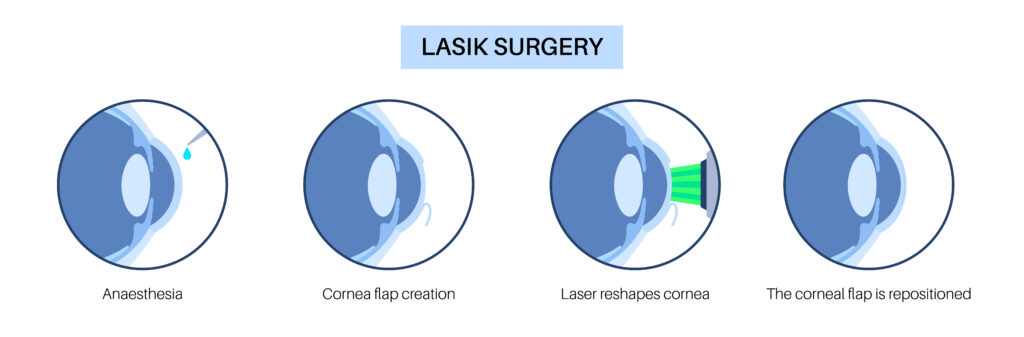
During LASIK, the surgeon creates access to the underlying corneal tissue and uses a laser to reshape the cornea according to the patient's refractive measurements. The corneal tissue is reshaped in a controlled manner, and the treated area is allowed to heal.
LASIK is different from cataract surgery because it does not involve removing the natural lens of the eye. Instead, it changes the cornea to correct refractive errors.
Because LASIK is a permanent procedure, appropriate patient selection and detailed preoperative evaluation are important.
Who Can Benefit From LASIK Surgery?
LASIK eye surgery may be considered for adults who want to reduce their dependence on glasses or contact lenses and meet the medical requirements for refractive surgery.
The suitability of LASIK depends on several factors, including:
- Stable glasses or contact lens prescription
- Overall eye health
- Corneal thickness
- Corneal shape
- Degree and type of refractive error
- Tear film and dry-eye status
- Pupil size
- Previous eye conditions or surgeries
- General health and healing factors
A stable prescription is particularly important because changes in refractive power can affect the predictability of treatment. The FDA recommends assessing whether a patient's prescription has remained stable before refractive surgery.
What Vision Problems Can LASIK Correct?
LASIK is primarily used for certain refractive errors. Depending on the patient's measurements and the laser system being used, treatment may be considered for:
Myopia
Myopia, commonly called short-sightedness or nearsightedness, makes distant objects appear blurred. LASIK can reshape the cornea to improve the way light focuses inside the eye.
Hyperopia
Hyperopia, or farsightedness, can make close objects difficult to see clearly. Some suitable patients may be considered for LASIK to correct hyperopic refractive errors.
Astigmatism
Astigmatism occurs when the cornea or another optical component of the eye has an irregular curvature. It can cause blurred or distorted vision at different distances. LASIK may correct certain forms of astigmatism after proper evaluation.
Not every degree or type of refractive error is suitable for LASIK. Your ophthalmologist will determine the available treatment options based on your individual eye measurements.
Why Is a LASIK Evaluation Important?
A detailed pre-LASIK examination is one of the most important steps in the treatment process.
The evaluation helps the eye specialist determine whether the cornea and overall eye health are suitable for laser vision correction. It also helps identify conditions that may increase the risk of complications.
The evaluation may include:
- Detailed eye examination
- Refraction testing
- Corneal thickness measurement
- Corneal mapping
- Assessment of corneal shape
- Eye pressure measurement
- Tear film and dry-eye evaluation
- Pupil assessment
- Retinal examination when required
Contact lens wearers may need to stop wearing lenses before certain measurements because contact lenses can temporarily change the shape of the cornea. The exact duration depends on the type of contact lens and should be determined by your eye doctor.
How Is LASIK Surgery Performed?
The exact technique can vary depending on the laser system, patient's eye measurements, and surgeon's treatment plan.
Generally, LASIK involves several important stages.
1. Preoperative Assessment
Before surgery, your eye specialist performs detailed measurements to understand your refractive error and corneal characteristics.
2. Preparing the Eye
The eye is prepared for the procedure, and local anesthetic eye drops are generally used to reduce discomfort.
3. Creating the Corneal Flap
In traditional LASIK, a corneal flap is created before the underlying corneal tissue is reshaped. In all-laser or bladeless LASIK, a laser can be used to create the flap.
4. Reshaping the Cornea
A laser is programmed according to the patient's measurements. The laser removes microscopic amounts of corneal tissue to modify its shape.
5. Repositioning the Flap
After corneal reshaping, the flap is repositioned. No conventional stitches are generally used to secure a LASIK flap.
The procedure is designed to be precise, but the outcome depends on individual eye characteristics and healing.
Benefits of LASIK Surgery
For appropriately selected patients, LASIK surgery may offer several practical benefits.
These can include:
- Reduced dependence on glasses
- Reduced dependence on contact lenses
- Improved unaided distance vision
- Convenience during sports and physical activities
- Greater freedom from glasses for everyday activities
- Short procedure and recovery period for many patients
- Customized treatment based on individual eye measurements
Is LASIK Surgery Safe?
LASIK is performed widely, but like any surgical procedure, it has potential risks and limitations.
Some patients may experience temporary symptoms such as:
- Dryness
- Blurred or fluctuating vision
- Light sensitivity
- Glare
- Halos around lights
- Difficulty with night vision
- Eye discomfort
In some cases, visual symptoms or dry eye can persist. There is also a possibility of under-correction or over-correction, and some patients may continue to need glasses or contact lenses.
For this reason, choosing LASIK should involve a discussion of the potential benefits, risks, alternatives, and your individual expectations.
LASIK Surgery vs Glasses and Contact Lenses
Glasses and contact lenses remain effective options for correcting refractive errors. LASIK is an elective surgical procedure that some people choose to reduce their dependence on these corrective methods.
| Feature | Glasses | Contact Lenses | LASIK |
|---|---|---|---|
| Surgical procedure | No | No | Yes |
| Daily maintenance | Low | Required | Generally low after healing |
| Corrects refractive error | Yes | Yes | Yes, in suitable patients |
| Requires ongoing prescription | Yes | Yes | Results may reduce dependence |
| Suitable for everyone | Generally widely applicable | Generally widely applicable | No |
| Permanent corneal change | No | No | Yes |
LASIK Recovery and Aftercare
Recovery varies from person to person. Vision may be blurry or hazy immediately after the procedure, and some temporary discomfort or irritation may occur.
Your doctor may prescribe eye drops and provide specific instructions to support healing.
After LASIK, you may be advised to:
- Avoid rubbing your eyes
- Use prescribed eye drops as directed
- Attend scheduled follow-up appointments
- Protect your eyes while sleeping if advised
- Avoid swimming for the period recommended by your doctor
- Avoid contact sports during the recommended recovery period
- Avoid eye makeup until your doctor says it is appropriate
How Long Does LASIK Recovery Take?
Many patients experience relatively quick visual improvement after LASIK, but recovery is not identical for everyone.
Your vision may fluctuate during the initial healing period. Some patients may experience glare, halos, dryness, or other visual symptoms while the eyes stabilize.
Follow-up examinations are important because your ophthalmologist needs to monitor healing and visual results.
Why Choose Mansarovar Eye Hospital for LASIK Surgery in Lucknow?
Choosing an eye hospital for LASIK involves more than looking at the procedure itself. Proper patient selection, detailed measurements, appropriate technology, surgical expertise, and postoperative monitoring all contribute to comprehensive refractive eye care.
At Mansarovar Eye Hospital, patients can undergo an eye evaluation to determine whether laser vision correction is suitable for their individual requirements.
The LASIK consultation can focus on:
- Detailed refractive assessment
- Corneal evaluation
- Eye health examination
- LASIK candidacy assessment
- Discussion of treatment options
- Preoperative guidance
- Postoperative monitoring
- Individualized eye-care recommendations
Mansarovar Eye Hospital is located on Vidhan Sabha Marg, opposite Akashvani, Lalbagh, Lucknow.
Best LASIK Surgery in Lucknow for Personalized Vision Care
Best LASIK Surgery in Lucknow is not simply about choosing the latest procedure. It is about determining whether LASIK is appropriate for your eyes and selecting a treatment approach based on accurate measurements and professional evaluation.
At Mansarovar Eye Hospital, patients can discuss their vision concerns with an eye specialist and undergo a comprehensive assessment before making a decision.
If you are tired of depending on glasses or contact lenses, LASIK may be an option worth discussing. However, suitability varies from person to person. A detailed examination is the best way to understand your options, expected results, and possible risks.
Frequently Asked Questions About LASIK Surgery
Is LASIK surgery painful?
LASIK is generally performed using numbing eye drops. Some patients may experience temporary irritation, burning, watering, or discomfort after the procedure.
Can LASIK permanently remove glasses?
LASIK can reduce dependence on glasses or contact lenses in suitable patients, but it does not guarantee that glasses will never be needed again. Some patients may still require glasses for certain activities or reading.
Is everyone eligible for LASIK?
No. LASIK candidacy depends on factors such as age, prescription stability, corneal thickness and shape, eye health, dry-eye status, and general health.
How soon can I return to normal activities after LASIK?
Recovery varies. Many patients experience relatively quick visual improvement, but your doctor will advise when you can safely return to work, exercise, swimming, driving, and other activities.
Can LASIK correct astigmatism?
LASIK can correct certain types and degrees of astigmatism when the patient's eye measurements meet the requirements for treatment.
Is LASIK better than contact lenses?
LASIK and contact lenses have different benefits and limitations. LASIK may reduce dependence on contact lenses, but it is a surgical procedure with potential risks. Your eye specialist can help you compare both options based on your eye health and lifestyle.
Conclusion
Best LASIK Surgery in Lucknow should always begin with a thorough eye examination and an honest discussion about suitability, benefits, limitations, risks, and alternatives. LASIK can reduce dependence on glasses or contact lenses for appropriately selected patients, but individual outcomes vary.
Mansarovar Eye Hospital provides comprehensive eye-care evaluation for patients considering LASIK eye surgery in Lucknow. If you are considering laser vision correction, schedule an eye examination to understand whether you are a suitable candidate and which treatment option best matches your visual needs.