Uveitis Symptoms and Treatment: 7 Important Signs You Should Know
Uveitis Symptoms and Treatment: 7 Important Signs You Should Know
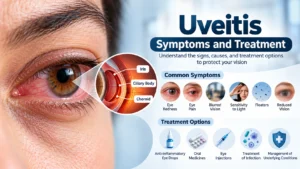
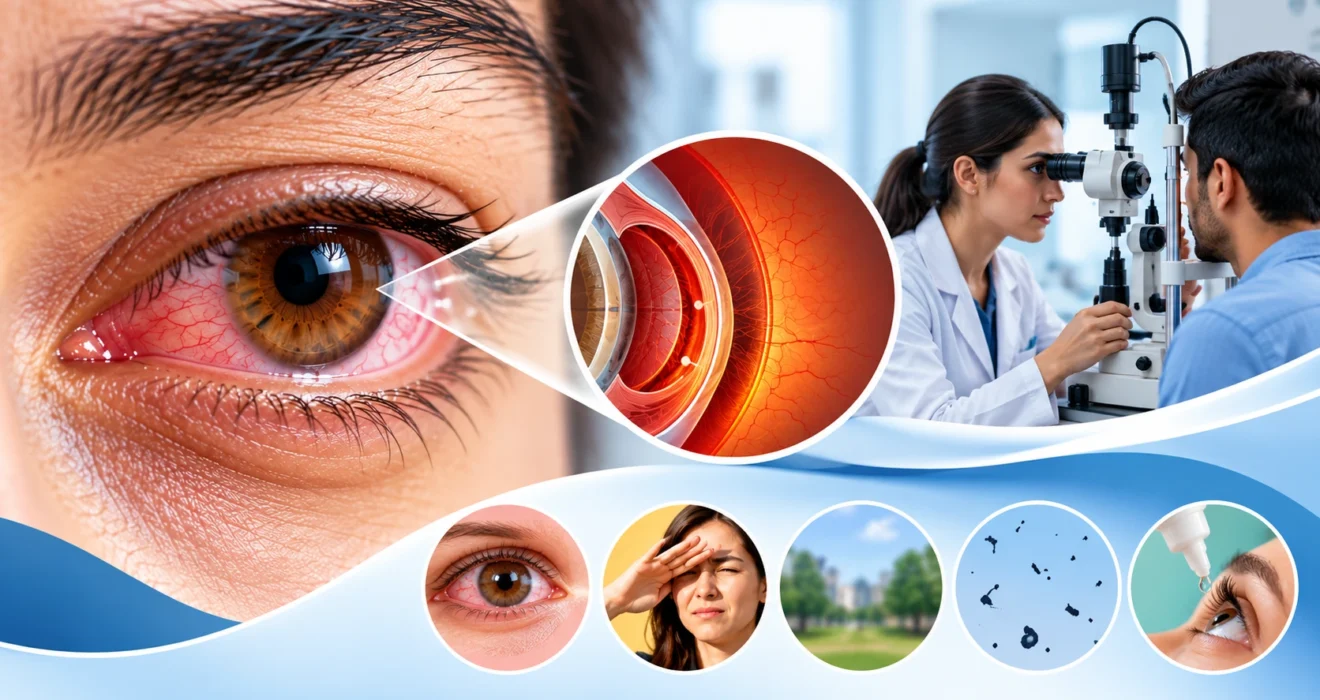
Understanding Uveitis Symptoms and Treatment is important because uveitis is an inflammatory eye condition that may affect vision if it is not diagnosed and treated on time. It can cause eye redness, pain, blurred vision, floaters, and sensitivity to light. In some people, the symptoms start suddenly, while in others they may develop more gradually.
Uveitis can affect one eye or both eyes. It may involve the front, middle, or back part of the eye depending on the type. Because the condition can look similar to other common eye problems, a proper eye examination is usually required to confirm the diagnosis.
According to the National Eye Institute, common early symptoms include blurry vision, floaters, eye pain, redness, and sensitivity to light. Untreated uveitis can sometimes lead to vision loss, which is why timely evaluation is important. National Eye Institute
For patients who want to understand Uveitis Symptoms and Treatment, this guide explains the common signs, causes, diagnosis, available treatment options, possible complications, and when to consult an eye specialist.
What Is Uveitis?
Uveitis is inflammation inside the eye, mainly affecting the uvea. The uvea is the middle layer of the eye and includes three important structures:
- Iris
- Ciliary body
- Choroid
The inflammation may also affect nearby structures such as the retina or vitreous.
Knowing about Uveitis Symptoms and Treatment is useful because uveitis is not one single disease. It is a group of inflammatory conditions that can affect different areas of the eye.
The National Eye Institute explains that the uvea is located between the white outer part of the eye and the retina. Depending on which part is affected, uveitis is classified into different types. National Eye Institute
Types of Uveitis
Different types of uveitis may produce different symptoms. Therefore, Uveitis Symptoms and Treatment can vary from one patient to another.
Anterior Uveitis
Anterior uveitis affects the front part of the eye, mainly the iris.
It is commonly associated with:
- Eye redness
- Pain
- Light sensitivity
- Blurred vision
- Watering
Anterior uveitis is one of the more common forms of uveitis.
Intermediate Uveitis
Intermediate uveitis mainly affects the vitreous and structures in the middle of the eye.
Possible symptoms include:
- Floaters
- Blurry vision
- Reduced vision
- Mild visual discomfort
Patients may not always have obvious redness or pain.
Posterior Uveitis
Posterior uveitis affects structures at the back of the eye such as the retina and choroid.
Common symptoms may include:
- Floaters
- Blurred vision
- Distorted vision
- Reduced visual clarity
Because the retina plays an important role in vision, posterior inflammation requires careful evaluation.
Panuveitis
Panuveitis affects multiple parts of the uvea.
The exact Uveitis Symptoms and Treatment plan depends on how much of the eye is affected and the underlying cause.
7 Common Uveitis Symptoms You Should Know
Recognising the signs early is an important part of understanding Uveitis Symptoms and Treatment.
1. Eye Redness
Eye redness is one of the commonly noticed symptoms of uveitis.
However, not every red eye is caused by uveitis. Eye redness may also occur due to:
- Allergy
- Dry eye
- Infection
- Eye strain
- Dust exposure
- Conjunctivitis
With uveitis, redness may occur together with eye pain, blurred vision, or light sensitivity.
If redness does not improve or is accompanied by vision changes, an eye examination is recommended.
2. Eye Pain
Eye pain is another important symptom.
The discomfort may feel like:
- Aching
- Deep eye pain
- Tenderness
- Pain when exposed to bright light
Eye pain with redness should not be ignored.
When discussing Uveitis Symptoms and Treatment, pain is especially important because it can help an ophthalmologist determine whether the front part of the eye is inflamed.
3. Blurred Vision
Blurred vision is one of the most important symptoms associated with uveitis.
Inflammation may interfere with normal visual clarity.
Patients may notice:
- Mild haziness
- Difficulty reading
- Reduced distance vision
- Blurred objects
- Difficulty focusing
The National Eye Institute lists blurry vision as one of the common early symptoms of uveitis. National Eye Institute
If blurred vision appears suddenly, it should be examined promptly.
4. Sensitivity to Light
Sensitivity to bright light is known as photophobia.
Patients may find it uncomfortable to look at:
- Sunlight
- Bright indoor lights
- Phone screens
- Vehicle headlights
Photophobia is commonly associated with anterior uveitis.
When evaluating Uveitis Symptoms and Treatment, light sensitivity is an important symptom, especially when it occurs with redness and pain.
5. Floaters
Floaters may appear as:
- Small dots
- Threads
- Lines
- Cobweb-like shapes
- Moving shadows
A small number of floaters can occur normally, especially with age.
However, inflammation inside the eye may also increase floaters.
Sudden new floaters should be evaluated, particularly if they are accompanied by flashes of light or a dark shadow in vision.
6. Reduced Vision
Uveitis may cause reduced vision if inflammation affects important structures inside the eye.
The amount of visual change depends on:
- Type of uveitis
- Severity
- Location of inflammation
- Duration
- Presence of complications
Understanding Uveitis Symptoms and Treatment early can help reduce the chance of inflammation remaining untreated for too long.
7. Watery or Irritated Eyes
Some patients may experience eye watering or irritation.
This symptom alone does not confirm uveitis because watering can also occur due to:
- Dry eye
- Allergy
- Infection
- Dust
- Eye strain
However, watering together with pain, redness, or blurred vision should be assessed by an ophthalmologist.
What Causes Uveitis?
The causes of uveitis can differ from person to person.
In some patients, doctors identify an underlying condition. In others, no definite cause is found.
Understanding the cause is an important part of planning Uveitis Symptoms and Treatment.
Autoimmune and Inflammatory Conditions
Some autoimmune or inflammatory diseases can be associated with uveitis.
These may include conditions in which the immune system reacts abnormally and causes inflammation.
The National Eye Institute lists several conditions that can be associated with uveitis, including ankylosing spondylitis, lupus, psoriasis, rheumatoid arthritis, sarcoidosis, and ulcerative colitis. National Eye Institute
Infections
Certain infections can also cause inflammation inside the eye.
These may include viral, bacterial, fungal, or parasitic infections.
This is one reason why self-treatment with steroid eye drops is not advisable.
The correct Uveitis Symptoms and Treatment plan depends on whether the inflammation is infectious or non-infectious.
Eye Injury
An eye injury may sometimes trigger inflammation.
Patients should tell their ophthalmologist if they recently had:
- Eye trauma
- Surgery
- Foreign body injury
- Accidental hit near the eye
Unknown Cause
In many cases, the exact cause may remain unknown even after examination.
This is known as idiopathic uveitis.
How Is Uveitis Diagnosed?
Diagnosis is essential before beginning Uveitis Symptoms and Treatment.
An ophthalmologist may use several methods to evaluate the eye.
Medical History
The doctor may ask:
- When symptoms started
- Whether one or both eyes are affected
- Whether symptoms occurred before
- Whether there is any history of autoimmune disease
- Whether the patient recently had an infection
- Whether there was any eye injury
- Which medicines the patient is taking
Visual Acuity Test
A vision test helps determine how clearly the patient can see.
It also helps measure whether uveitis has affected vision.
Slit-Lamp Examination
A slit lamp allows an eye specialist to examine the front structures of the eye under magnification.
It can help identify inflammatory changes.
Dilated Eye Examination
The pupil may be dilated using eye drops so that the retina, vitreous, optic nerve, and other internal eye structures can be examined.
The National Eye Institute notes that uveitis is commonly assessed as part of a dilated eye examination along with medical history. National Eye Institute
Eye Pressure Check
Uveitis and some medicines used for treatment can affect eye pressure.
Therefore, intraocular pressure may be checked during follow-up appointments.
OCT or Retinal Imaging
Depending on the type of inflammation, the doctor may recommend OCT or other imaging.
These tests can help identify swelling or retinal involvement.
Blood Tests
Blood tests are not required for every patient.
They may be recommended if the doctor suspects:
- Infection
- Autoimmune disease
- Systemic inflammatory condition
Uveitis Symptoms and Treatment Options
The treatment of uveitis depends on:
- Type
- Location
- Severity
- Cause
- Whether one or both eyes are affected
- Whether the condition is recurrent
The goal of Uveitis Symptoms and Treatment is generally to control inflammation, protect the eye, relieve symptoms, and treat the underlying cause when possible.
1. Anti-Inflammatory Eye Drops
Prescription corticosteroid eye drops are commonly used in some forms of anterior uveitis.
They help reduce inflammation.
However, steroid drops should only be used under medical supervision.
Improper or prolonged use can sometimes increase the risk of:
- Cataract
- Raised eye pressure
- Glaucoma
The National Eye Institute states that steroid medicines may be used in the form of eye drops, pills, injections, or implants depending on the condition. National Eye Institute
2. Pupil-Dilating Eye Drops
Some patients may also receive pupil-dilating drops.
These may help:
- Reduce discomfort
- Relax the iris
- Prevent certain complications
- Reduce pain from muscle spasms
Temporary blurred near vision can occur while the pupil remains dilated.
3. Oral Medicines
If inflammation is more severe or affects deeper areas of the eye, oral medicines may be required.
The choice depends on the type of uveitis and the patient’s overall condition.
4. Eye Injections
Certain cases may require medicine delivered around or inside the eye.
This option is generally considered when inflammation cannot be adequately controlled with eye drops alone.
5. Treatment of Infection
If an infection is responsible for uveitis, treatment may include specific antimicrobial medicines.
For this reason, Uveitis Symptoms and Treatment should always be guided by proper diagnosis.
Using anti-inflammatory medicines without knowing the underlying cause can sometimes be harmful.
6. Immunomodulatory Medicines
Some recurrent or severe cases of non-infectious uveitis may require medicines that modify the immune response.
These treatments are generally used under specialist supervision.
7. Surgical or Implant-Based Treatment
In selected cases, doctors may recommend an implant or another procedure to deliver medication inside the eye.
This is not required for every patient.
Treatment is customised according to the type of uveitis and response to previous therapy.
Why Follow-Up Is Important
Follow-up is an important part of Uveitis Symptoms and Treatment.
Even if redness and pain improve, inflammation may still need monitoring.
During follow-up, the ophthalmologist may check:
- Vision
- Eye pressure
- Degree of inflammation
- Retina
- Response to treatment
- Side effects of medicines
Patients should not stop prescribed medicines suddenly unless advised by their doctor.
Can Uveitis Come Back?
Yes, uveitis can return in some patients.
Some people experience only one episode, while others may develop recurrent inflammation.
If previous symptoms such as redness, pain, floaters, or blurred vision return, an eye examination should be considered.
Understanding Uveitis Symptoms and Treatment can help patients recognise a possible recurrence earlier.
Can Uveitis Affect Vision Permanently?
Uveitis can potentially affect vision, particularly if inflammation is severe, recurrent, or untreated.
Possible complications can include:
- Cataract
- Glaucoma
- Macular edema
- Retinal damage
- Raised eye pressure
- Scar formation
- Vision loss
The National Eye Institute states that untreated uveitis can lead to vision loss, which is why early examination and treatment are important. National Eye Institute
When Should You See an Eye Specialist?
You should consider seeing an ophthalmologist if you experience:
- Persistent eye redness
- Eye pain
- Blurred vision
- New floaters
- Light sensitivity
- Sudden visual changes
- Recurrent eye inflammation
Seek urgent medical evaluation if there is:
- Sudden severe loss of vision
- A large increase in floaters
- Flashes of light
- A dark curtain-like shadow
- Severe eye pain
- Significant eye injury
These symptoms may indicate uveitis or another urgent eye condition.
Uveitis Symptoms and Treatment in Children
Children can also develop uveitis.
In some cases, symptoms may be difficult to recognise because young children may not clearly describe what they are experiencing.
Parents may notice:
- Eye redness
- Light avoidance
- Frequent eye rubbing
- Reduced visual attention
- Difficulty seeing
- Eye discomfort
Some inflammatory conditions in children may be associated with uveitis even without obvious symptoms.
Regular ophthalmic examination may be recommended in selected cases.
Is Uveitis Contagious?
Uveitis itself is generally not contagious.
However, certain infections associated with eye inflammation may have their own methods of transmission.
The diagnosis helps determine whether infection is involved.
Can Uveitis Be Prevented?
Not every case can be prevented.
However, patients may reduce the risk of complications by:
- Seeking early evaluation
- Managing underlying health conditions
- Following prescribed treatment
- Attending follow-up visits
- Avoiding self-medication
- Protecting the eyes from injury
- Reporting recurrent symptoms
These steps are an important part of long-term Uveitis Symptoms and Treatment management.
Uveitis Symptoms and Treatment in Lucknow
Patients experiencing persistent eye redness, blurred vision, eye pain, floaters, or sensitivity to light can consider consulting an ophthalmologist for a detailed eye examination.
Mansarovar Eye Hospital provides evaluation and management for various eye conditions in Lucknow.
For detailed information about the hospital’s uveitis-related services, visit the Uveitis Treatment in Lucknow page.
This internal link is useful because the blog explains Uveitis Symptoms and Treatment, while the service page targets patients specifically looking for uveitis treatment in Lucknow.
Difference Between Uveitis and Conjunctivitis
Uveitis and conjunctivitis can both cause a red eye, but they affect different parts of the eye.
Conjunctivitis mainly affects the conjunctiva, which covers the front surface of the eye and inner eyelids.
Uveitis involves inflammation inside the eye.
Possible differences include:
| Uveitis | Conjunctivitis |
|---|---|
| Inflammation inside the eye | Inflammation of conjunctiva |
| May cause eye pain | Often causes irritation |
| Can cause blurred vision | Vision usually remains relatively clear |
| Light sensitivity may occur | Light sensitivity may be less prominent |
| Requires ophthalmic evaluation | Cause may be allergic, viral or bacterial |
Because symptoms can overlap, diagnosis should not be based only on appearance.
Can Screen Time Cause Uveitis?
Normal screen use is not considered a direct cause of uveitis.
Long periods of screen use may contribute to:
- Eye strain
- Dryness
- Temporary blurred vision
- Headaches
However, these symptoms are different from inflammation inside the eye.
If symptoms include persistent pain, redness, photophobia, or new floaters, they should not simply be assumed to be caused by screen exposure.
Diet and Uveitis
There is no single food that can cure uveitis.
A balanced diet may support general health, but medical treatment should not be replaced with dietary remedies.
People with uveitis should follow their doctor’s advice regarding medicines and management of any underlying health condition.
Frequently Asked Questions About Uveitis Symptoms and Treatment
What are the most common uveitis symptoms?
Common symptoms include blurred vision, eye redness, pain, sensitivity to light, and floaters. The exact symptoms depend on the type of uveitis. National Eye Institute
Is uveitis curable?
Some cases may resolve completely, while others may recur or become chronic. Treatment depends on the cause and type.
How long does uveitis treatment take?
Treatment duration varies. Mild cases may improve relatively quickly, while recurrent or chronic uveitis may require longer treatment and monitoring.
Can uveitis cause blindness?
Severe or untreated inflammation may lead to complications that affect vision. Early diagnosis and treatment can help reduce this risk. National Eye Institute
Which doctor treats uveitis?
Uveitis is evaluated and treated by an ophthalmologist. Some complex cases may require additional specialists.
Can uveitis affect both eyes?
Yes. It may affect one or both eyes.
Are steroid eye drops safe for uveitis?
Steroid eye drops can be useful when prescribed appropriately, but they should only be used under medical supervision because steroid treatment can increase the risk of cataract or glaucoma in some patients. National Eye Institute
Can uveitis come back after treatment?
Yes. Some forms can recur, which is why follow-up is important.
Final Thoughts
Learning about Uveitis Symptoms and Treatment can help patients recognise unusual eye symptoms earlier.
Persistent redness, eye pain, blurred vision, increased floaters, or sensitivity to light should not be ignored.
The correct treatment depends on the type and cause of inflammation. Some patients may need anti-inflammatory eye drops, while others may require oral medicine, injections, treatment for infection, or additional therapies.
A detailed eye examination is important because symptoms alone cannot confirm the diagnosis.
For patients in Lucknow who want more information about evaluation and management, visit the Uveitis Treatment in Lucknow page.
For an authoritative external reference, you can also link the sentence “Learn more about uveitis” to the National Eye Institute’s uveitis guide.