
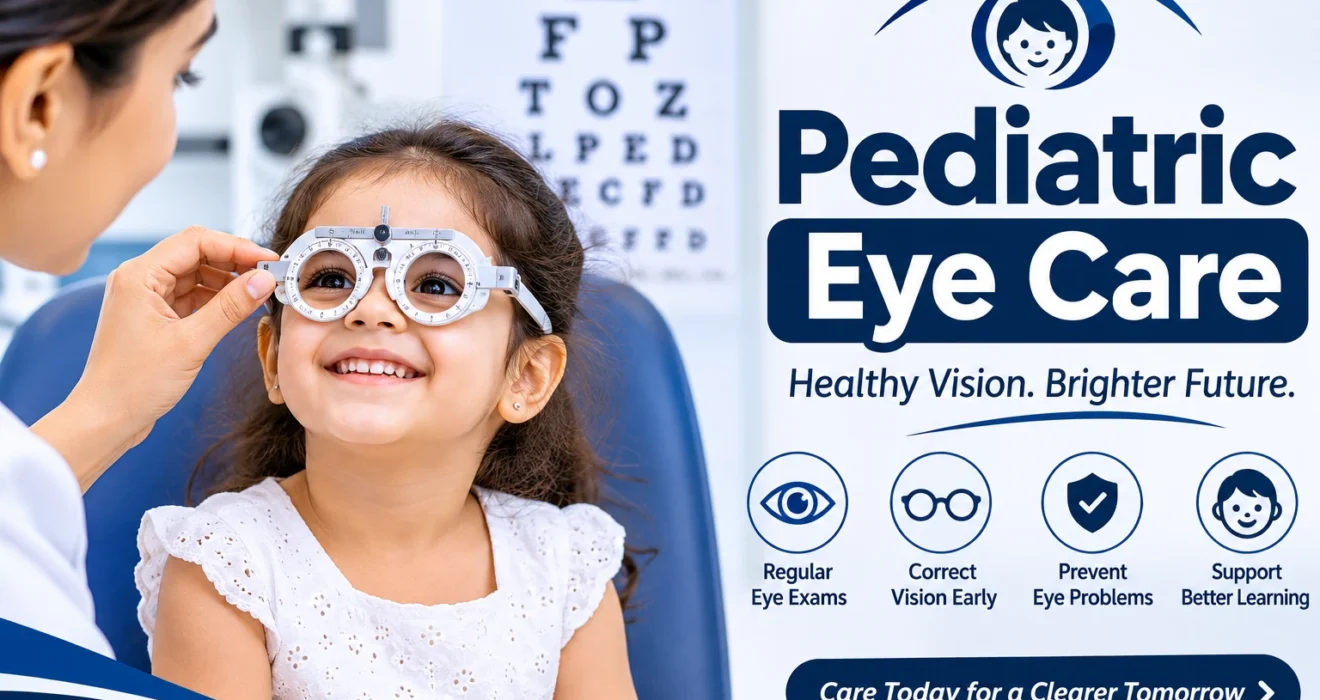
Pediatric Eye Care in Lucknow: A Complete Guide to Children’s Eye Health
Pediatric Eye Care in Lucknow: A Complete Guide to Children’s Eye Health
Children use their eyes to explore the world, learn new things, read books, recognize faces, and participate in everyday activities. Good vision plays an important role in their overall growth and development. However, many children experience vision problems that may go unnoticed because they cannot always explain what they are seeing or feeling.
This is why Pediatric Eye Care in Lucknow is important for parents who want to protect their children’s eyesight and support healthy visual development. Regular eye examinations can help identify vision problems at an early stage and ensure that children receive appropriate care.
At Mansarovar Eye Hospital, parents can seek professional guidance for children’s eye health, vision concerns, and eye-related problems. Understanding common childhood eye conditions, their symptoms, and available treatment options can help parents make informed decisions about their child’s vision.
In this guide, we will discuss the importance of children’s eye care in Lucknow, common eye problems, warning signs, eye examinations, treatment options, and tips to maintain healthy eyesight.
What Is Pediatric Eye Care?
Pediatric eye care is a specialized area of eye care focused on children’s vision and eye health, from infancy through adolescence. It involves examining the eyes, identifying vision-related concerns, monitoring visual development, and managing childhood eye conditions.
Children’s eyes are still developing, so some vision problems may affect their learning, coordination, and daily activities if they are not identified early.
A pediatric eye examination may help identify conditions such as:
- Refractive errors, including myopia and hyperopia
- Astigmatism
- Squint or crossed eyes (strabismus)
- Lazy eye (amblyopia)
- Eye infections and allergies
- Problems with focusing and eye coordination
- Congenital eye conditions
Choosing appropriate Pediatric Eye Care in Lucknow helps parents get professional advice about their child’s visual development and understand whether further examination or treatment is needed.
Why Is Children’s Eye Care Important?
Vision plays a major role in a child’s physical, social, and educational development. Children depend on their eyesight for classroom activities, reading, writing, playing sports, and interacting with others.
Unfortunately, children do not always recognize that their vision is unclear. They may assume that everyone sees the same way they do. As a result, some eye conditions can remain unnoticed for a long time.
Here are some important reasons why children’s eye health should not be ignored.
1. Supports Learning and Academic Performance
Children use their vision throughout the school day. Reading textbooks, writing in notebooks, looking at classroom boards, and using digital learning devices all require clear vision.
Undetected vision problems may make these activities difficult. A child who frequently loses their place while reading or struggles to see the board may benefit from a professional eye examination. Pediatric Eye Care in Lucknow helps parents address such vision concerns, identify potential eye problems early, and support their children’s visual development.
2. Helps Identify Eye Problems Early
Some childhood eye conditions are easier to manage when identified during the early years. For example, amblyopia, commonly known as lazy eye, can affect the development of vision in one eye.
Early assessment allows an eye specialist to determine whether treatment is required.
3. Supports Healthy Visual Development
A child’s visual system continues developing during childhood. Regular eye assessments can help monitor vision and identify problems that may interfere with normal visual development.
4. Improves Everyday Activities
Clear vision helps children participate in outdoor games, sports, drawing, reading, and other daily activities. Identifying vision difficulties can help parents understand why their child may be struggling with certain tasks.
Common Eye Problems in Children
Childhood eye problems can vary depending on age, development, family history, and other factors. Some conditions cause noticeable symptoms, while others may develop without obvious warning signs.
Understanding common childhood eye conditions can help parents recognize when professional evaluation may be necessary.
1. Myopia (Nearsightedness)
Myopia is a common vision condition in which children can see nearby objects clearly but have difficulty seeing distant objects.
A child with myopia may:
- Sit very close to the television.
- Move closer to the classroom board.
- Squint while looking at distant objects.
- Have difficulty recognizing people from a distance.
- Complain of headaches or eye strain.
Myopia is generally managed with appropriate prescription glasses. Depending on the child’s age and individual circumstances, an eye specialist may also discuss other myopia management options.
2. Hyperopia (Farsightedness)
Hyperopia occurs when distant objects may appear clearer than nearby objects, although the effect depends on the degree of farsightedness.
Children with significant hyperopia may experience difficulty focusing on close objects.
Possible symptoms include:
- Eye strain while reading.
- Headaches after studying.
- Difficulty concentrating on nearby tasks.
- Blurred vision.
- Eye discomfort.
An eye examination can determine whether corrective glasses or other management is necessary.
When to Consult a Pediatric Eye Specialist in Lucknow
Parents should consider an eye examination if their child frequently rubs their eyes, squints while watching television, complains of headaches, or has difficulty reading. These signs may indicate an underlying vision problem that needs professional attention. Seeking Pediatric Eye Care in Lucknow can help identify such concerns through appropriate eye examinations and ensure children receive suitable treatment and guidance for maintaining healthy eyesight.
3. Astigmatism
Astigmatism is a refractive error caused by an irregular curvature of the cornea or lens. It can make vision appear blurred or distorted at different distances.
Children with astigmatism may experience:
- Blurred vision.
- Difficulty reading.
- Squinting.
- Headaches.
- Eye fatigue.
Prescription glasses are commonly used to correct astigmatism. The appropriate prescription depends on the child’s examination.
4. Lazy Eye (Amblyopia)
Amblyopia, commonly called lazy eye, develops when the brain and one eye do not work together properly during visual development. The brain may rely more heavily on the stronger eye.
Common causes include:
- Significant differences in refractive errors between the eyes.
- Squint or misalignment of the eyes.
- Conditions that block clear vision during early childhood.
Some children with amblyopia do not show visible symptoms. This makes professional eye examinations particularly important.
Treatment may include prescription glasses, patching the stronger eye, or other treatments recommended by an eye specialist.
Benefits of Regular Pediatric Eye Care in Lucknow
Regular eye checkups help parents stay informed about their child’s vision and overall eye health. Some children may develop eyesight problems without showing noticeable symptoms, which can affect their reading, learning, and daily activities. Choosing appropriate Pediatric Eye Care in Lucknow helps identify conditions such as lazy eye, squint, and refractive errors early. Timely eye examinations and proper guidance from an eye specialist can support healthy visual development as children grow.
5. Squint (Strabismus)
Squint, also known as strabismus, is a condition in which the eyes do not align in the same direction. One eye may turn inward, outward, upward, or downward.
Parents may notice:
- One eye appearing misaligned.
- A child tilting their head frequently.
- Closing one eye in bright sunlight.
- Difficulty maintaining eye alignment.
Squint should be evaluated by an eye specialist because it may be associated with amblyopia or other vision problems.
Treatment depends on the underlying cause and may involve glasses, patching, or surgery in selected cases.
Regular Pediatric Eye Care in Lucknow helps parents monitor their children’s eyesight and address vision-related concerns through timely professional examinations.
6. Conjunctivitis (Eye Infection)
Conjunctivitis is inflammation of the conjunctiva, the thin membrane covering the white part of the eye and the inner surface of the eyelids.
Common symptoms include:
- Redness in the eyes.
- Watering.
- Itching or irritation.
- Discharge or sticky eyelids.
- Swelling around the eyes.
Conjunctivitis may be caused by viruses, bacteria, allergies, or irritation. Treatment depends on the cause, so parents should avoid using eye drops without medical advice.
Importance of Pediatric Eye Care in Lucknow for School-Going Children
Clear vision plays an important role in a child’s learning and classroom activities. Reading textbooks, writing in notebooks, looking at classroom boards, and using digital learning devices all require healthy eyesight. With proper Pediatric Eye Care in Lucknow, parents can identify vision problems such as myopia, astigmatism, or difficulty focusing at an early stage. If a child frequently squints, complains of headaches, or struggles to see the classroom board, a professional eye examination can help identify the underlying cause and determine the appropriate treatment.
Warning Signs That Your Child May Have an Eye Problem
Children may not always communicate vision difficulties clearly. Parents should pay attention to changes in their child’s behaviour and visual habits.
Some common warning signs include:
- Frequently rubbing the eyes.
- Squinting while watching television.
- Holding books very close to the face.
- Complaining of frequent headaches.
- Closing one eye while reading or looking at objects.
- Difficulty seeing the classroom board.
- Excessive tearing or eye redness.
- Poor hand-eye coordination.
- Unusual head tilting.
- Avoiding reading or other close-up activities.
These signs do not necessarily confirm an eye condition. However, if you notice them regularly, consider arranging a professional eye examination.
Sudden vision loss, severe eye pain, eye injury, or sudden changes in eye alignment require urgent medical assessment.
Expert Children’s Eye Care and Vision Testing in Lucknow
Healthy eyesight is essential for a child’s learning, confidence, and daily activities. Professional Pediatric Eye Care in Lucknow helps parents identify common childhood vision problems, including myopia, hyperopia, astigmatism, lazy eye, and squint. Regular vision testing, eye health assessments, and timely consultation with a pediatric eye specialist can help detect potential concerns early. Choosing the right child eye hospital in Lucknow allows parents to understand available treatment options and take informed steps towards their child’s long-term eye health.
When Should You Take Your Child for an Eye Examination?
Parents often wonder when their children should have their first eye examination. For families looking for Pediatric Eye Care in Lucknow, understanding the right time for an eye checkup is important. The appropriate timing depends on the child’s age, development, risk factors, and previous screening results.
A general approach includes:
Infancy: Newborns should receive routine eye assessments as part of their healthcare. Babies with unusual eye appearance, abnormal visual behaviour, or significant risk factors may need an earlier specialist examination.
Preschool years: Children should have their vision assessed before starting school. A comprehensive examination may be recommended if screening identifies a concern.
School-age children: Regular vision screening and eye examinations when indicated can help identify refractive errors and other vision problems.
Teenagers: Vision should continue to be monitored, particularly if the child experiences headaches, blurred vision, eye strain, or difficulty seeing distant objects.
Children with existing eye conditions, a family history of certain eye problems, or other risk factors may require more frequent examinations based on their eye specialist’s advice.
What Happens During a Pediatric Eye Examination?
A pediatric eye examination is designed to assess how well a child’s eyes function and whether any vision-related problems are present.
The exact tests depend on the child’s age, symptoms, and ability to cooperate.
Some common components include:
1. Medical and Family History
The eye specialist may ask about the child’s general health, previous eye problems, family history, and any symptoms noticed by parents.
2. Visual Acuity Test
This test checks how clearly a child can see objects at different distances. Depending on the child’s age, pictures, symbols, letters, or other methods may be used.
3. Eye Alignment Assessment
The specialist checks whether both eyes are aligned properly and work together.
4. Refraction Test
Refraction helps identify whether a child has myopia, hyperopia, or astigmatism. Eye drops may sometimes be used to temporarily relax focusing muscles and obtain a more accurate measurement.
5. Eye Health Examination
The specialist may examine the front and back structures of the eyes to check for abnormalities or signs of eye disease.
These examinations help determine whether a child needs glasses, further investigation, or treatment.
Pediatric Eye Treatment Options
The right treatment depends on the child’s age, diagnosis, severity of the condition, and overall eye health. Not every child requires the same treatment.
Some commonly used treatment options include:
Prescription Glasses
Glasses may be recommended for children with myopia, hyperopia, astigmatism, or certain other vision conditions. The correct prescription helps improve visual clarity.
Parents should ensure that children wear their prescribed glasses as advised by their eye specialist.
Eye Patching
Patching may be recommended for children with amblyopia. It involves covering the stronger eye for a prescribed period to encourage the weaker eye to develop better vision.
The duration and schedule should always be decided by the treating specialist.
Eye Drops
Certain eye drops may be prescribed for specific conditions, including infections, allergies, or selected amblyopia treatment plans.
Parents should never use leftover or non-prescribed eye medication for their children.
Squint Treatment
Treatment for strabismus depends on the type and cause of eye misalignment. Options may include prescription glasses, patching, or eye muscle surgery when clinically appropriate.
Myopia Management
Children with progressive myopia may benefit from a personalized management plan based on their individual risk factors. As part of Pediatric Eye Care in Lucknow, an eye specialist may discuss suitable options such as specially designed glasses, contact lenses, or prescribed low-dose atropine where appropriate.
Regular eye examinations and monitoring are important to assess changes in prescription and eye growth, helping parents understand their child’s vision needs and manage myopia effectively.
How to Protect Your Child’s Eyes at Home
Parents can encourage healthy habits that support their children’s overall eye health.
Here are some practical tips:
1. Encourage Outdoor Activities: Regular outdoor play is associated with a lower risk of developing myopia in children. Encourage age-appropriate outdoor activities whenever possible.
2. Follow Healthy Screen Habits: Avoid unnecessary screen exposure, especially for very young children. Encourage regular breaks during prolonged near work.
3. Maintain Proper Reading Distance: Encourage children to hold books at a comfortable distance and read in adequate lighting.
4. Provide a Balanced Diet: Include a variety of fruits, vegetables, whole grains, and other nutritious foods in your child’s diet.
5. Avoid Eye Rubbing: Teach children to avoid rubbing their eyes, particularly when their hands are dirty.
6. Maintain Eye Hygiene: Encourage regular handwashing and discourage sharing personal towels or eye-related items.
7. Do Not Ignore Symptoms: Persistent redness, watering, squinting, or blurred vision should be assessed by an eye care professional.
Pediatric Eye Care in Lucknow: Choosing the Right Eye Hospital
Finding the right eye care facility is an important decision for parents. Children’s eye examinations may require a different approach depending on their age, communication skills, and specific vision concerns.
When choosing an eye hospital for your child, consider the following factors:
- Availability of eye specialists experienced in examining children.
- Appropriate diagnostic and vision-testing facilities.
- Evaluation of common childhood eye conditions.
- Guidance for parents about treatment and follow-up.
- A child-friendly examination environment.
- Clear communication about diagnosis and available treatment options.
If you are searching for Pediatric Eye Care in Lucknow, Mansarovar Eye Hospital is an option for parents seeking professional eye care and guidance for their children’s vision concerns.
The hospital provides an opportunity for families looking for a Child Eye Hospital in Lucknow to discuss eye-related symptoms, understand examination requirements, and seek appropriate medical advice for their children.
Parents should choose treatment based on a proper clinical examination and the recommendations of a qualified eye specialist to ensure their child’s eye health receives the right attention.
Choosing the right Pediatric Eye Care in Lucknow can help parents understand their child’s vision development and identify potential eye problems at an early stage.
1. Parents searching for Pediatric Eye Care in Lucknow should consider regular eye examinations to monitor their child’s vision and overall eye health.
2. Choosing a reliable Child Eye Hospital in Lucknow can help parents understand childhood vision problems and available treatment options.
3. Expert guidance from a Pediatric Eye Specialist in Lucknow can help identify conditions such as squint, lazy eye, and refractive errors.
4. Timely Children’s Eye Care in Lucknow plays an important role in identifying vision concerns during the early stages of childhood.
5. A professional Kids Eye Checkup in Lucknow can help detect eyesight changes and support healthy visual development.
Frequently Asked Questions About Pediatric Eye Care in Lucknow
Q1. What is the right age for a child’s first eye examination?
Newborns should receive routine eye assessments. A formal vision screening or comprehensive eye examination may be recommended during the preschool years, and earlier if symptoms or risk factors are present. Your child’s doctor can advise on the appropriate schedule.
Q2. How often should children get their eyes checked?
The frequency depends on age, previous examination results, family history, and existing eye conditions. Children with vision problems may require more frequent follow-ups than those with normal examinations.
Q3. What are the common signs of weak eyesight in children?
Common signs include squinting, sitting close to the television, holding books very close, frequent headaches, difficulty seeing distant objects, and rubbing the eyes repeatedly.
Q4. Can children develop myopia at an early age?
Yes. Myopia can develop during childhood and may progress as the child grows. Early diagnosis and appropriate myopia management can help monitor its progression.
Q5. Is lazy eye (amblyopia) treatable in children?
Amblyopia can often be treated, particularly when identified early. Treatment may include prescription glasses, eye patching, or other methods depending on the underlying cause and the child’s condition.
Q6. Does screen time affect children’s eyesight?
Excessive screen use may contribute to digital eye strain, dry eye symptoms, and increased near-work demands. High amounts of near work may also be associated with myopia development. Balanced screen habits and outdoor activities are encouraged.
Q7. Can squint in children be corrected?
Many cases of childhood squint can be managed. Treatment may include glasses, patching, or surgery, depending on the type and severity of misalignment.
Q8. When should parents consult a pediatric eye specialist?
Parents should seek an examination if their child experiences blurred vision, frequent squinting, eye redness, unusual eye alignment, headaches, or difficulty seeing. Sudden vision changes or severe eye pain require urgent assessment.
Q9. Where can I find Pediatric Eye Care in Lucknow?
Parents looking for Pediatric Eye Care in Lucknow can consider Mansarovar Eye Hospital for professional eye care and guidance. An examination can help identify the child’s specific vision needs and appropriate treatment options.
Q10. Are regular eye examinations necessary even if my child has no symptoms?
Yes. Some childhood eye conditions may not produce noticeable symptoms. Age-appropriate vision screening and eye examinations when recommended can help identify problems that may otherwise go unnoticed.
Conclusion
Healthy eyesight is an important part of childhood development. Vision problems such as myopia, hyperopia, astigmatism, amblyopia, and squint can affect children’s everyday activities and learning if they remain undetected.
Parents should pay attention to changes in their child’s visual habits and arrange professional eye examinations when needed. Early identification, appropriate treatment, and regular follow-ups can make a meaningful difference in managing many childhood eye conditions.
If you are searching for Pediatric Eye Care in Lucknow, consider consulting Mansarovar Eye Hospital to discuss your child’s eye health and examination requirements. Taking the right steps today can help support healthier vision as your child grows.
Medical Disclaimer: This article is intended for general educational purposes and should not be considered a substitute for professional medical advice, diagnosis, or treatment. Always consult a qualified eye specialist for concerns about your child’s vision or eye health.