LASIK Eye Surgery In Lucknow
LASIK Eye Surgery in Lucknow: Procedure, Benefits, Eligibility & Recovery
LASIK Eye Surgery for Clearer Vision and Reduced Dependence on Glasses ,Glasses and contact lenses help millions of people see clearly, but wearing them every day may sometimes feel inconvenient. For people who want to reduce their dependence on corrective eyewear, LASIK eye surgery in Lucknow is one of the most commonly considered vision correction procedures.
LASIK uses laser technology to reshape the cornea so that light entering the eye can focus more accurately on the retina. It is commonly used for refractive errors such as myopia, hyperopia, and astigmatism.
However, LASIK is not suitable for everyone. A detailed eye examination is necessary to determine whether the eyes are healthy enough for the procedure. This guide explains the LASIK procedure, eligibility, potential benefits, possible risks, and what patients can generally expect during recovery.
What to Know About LASIK Eye Surgery in Lucknow
LASIK stands for Laser-Assisted In Situ Keratomileusis. It is a type of refractive eye procedure designed to correct certain vision problems by changing the shape of the cornea.
The cornea is the transparent front surface of the eye. Its shape plays an important role in focusing light correctly. When the shape of the eye causes light to focus incorrectly, refractive errors can occur.
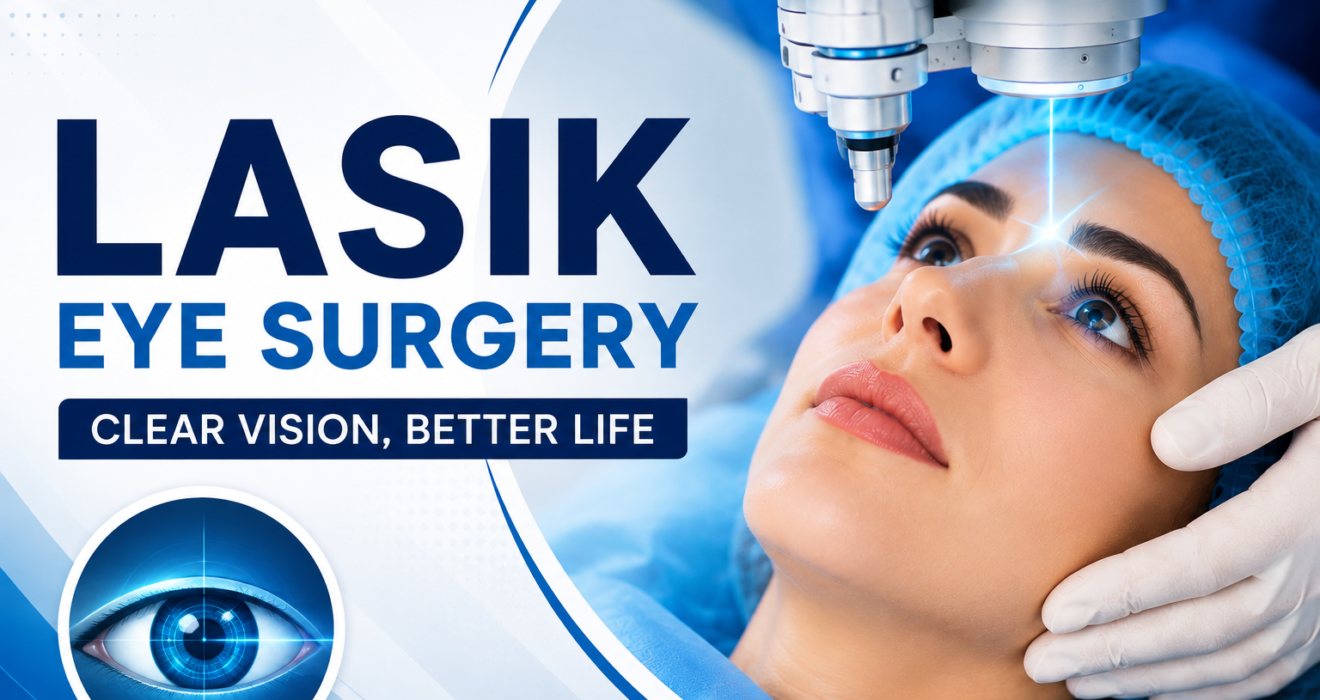
During LASIK eye surgery, a laser is used to precisely reshape the corneal tissue. The aim is to improve how light is focused on the retina and thereby improve vision.
LASIK may reduce a person’s dependence on glasses or contact lenses, although individual results can vary.
Which Vision Problems Can LASIK Correct?
LASIK may be considered for several common refractive errors.
Myopia or Nearsightedness
A person with myopia can usually see nearby objects clearly while distant objects appear blurred. LASIK can reshape the cornea to help improve the way distant images are focused.
Hyperopia or Farsightedness
Hyperopia can make nearby objects difficult to focus on, although vision problems can vary depending on age and the degree of refractive error.
Astigmatism
Astigmatism occurs when the cornea or lens has an irregular curvature. This can result in blurred or distorted vision at different distances. Modern laser vision correction techniques may help correct certain levels of astigmatism.
Whether a particular refractive error can be treated depends on factors such as prescription, corneal thickness, eye health, and the patient’s overall suitability.
Who Is a Good Candidate for LASIK?
Not everyone who wears glasses is automatically eligible for LASIK eye surgery. An ophthalmologist needs to examine the eyes before recommending the procedure.
Potential candidates generally need:
- A stable glasses or contact lens prescription
- Healthy corneas
- Adequate corneal thickness
- No significant active eye infection
- Suitable refractive error
- Realistic expectations about the results
- Overall healthy eyes
Age is also considered during evaluation. LASIK is generally performed in adults after the refractive prescription has become stable.
Certain medical conditions, pregnancy, severe dry eye, corneal disorders, or other eye conditions may affect eligibility. The final decision should therefore be based on a comprehensive eye assessment.
What Tests Are Done Before LASIK?
A detailed pre-LASIK evaluation is one of the most important parts of treatment planning.
The ophthalmologist may assess:
- Current eye prescription
- Corneal thickness
- Corneal shape and curvature
- Tear-film quality
- Pupil size
- Eye pressure
- General health of the cornea and retina
Corneal topography or other imaging may also be recommended to create a detailed map of the cornea.
These tests help determine whether LASIK eye surgery is appropriate and allow the surgeon to plan the treatment according to the patient’s eyes.
How Is the LASIK Procedure Performed?
LASIK is generally performed as a relatively short procedure. The exact technique and technology used may vary depending on the patient and treatment centre.
Step 1: Preparing the Eye
Numbing eye drops are usually applied before treatment to reduce discomfort. The eye is then carefully positioned for the procedure.
Step 2: Creating the Corneal Flap
A thin flap is created on the surface of the cornea using specialised technology.
Step 3: Reshaping the Cornea
The flap is gently lifted and a laser is used to reshape the underlying corneal tissue according to the patient’s refractive correction.
Step 4: Repositioning the Flap
After corneal reshaping is complete, the flap is placed back into its original position.
The procedure itself is generally completed relatively quickly, although patients may spend additional time at the eye centre for preparation and post-procedure observation.
Is LASIK Painful?
Because numbing drops are used, significant pain is not usually expected during the procedure. Some people may notice pressure or mild discomfort for a short period.
After LASIK eye surgery in Lucknow, temporary symptoms may include watering, irritation, sensitivity to light, or a gritty sensation.
Patients should avoid rubbing their eyes and follow the instructions provided by their ophthalmologist.
If severe pain, sudden vision loss, or unusual symptoms occur after the procedure, medical attention should be sought promptly.
Benefits of LASIK Eye Surgery
For appropriately selected patients, LASIK eye surgery in Lucknow can offer several potential benefits.
One of the main reasons people consider the procedure is reduced dependence on spectacles or contact lenses. This can make everyday activities such as exercising, travelling, or working more convenient.
Other potential benefits include relatively quick visual recovery and a short procedure time.
However, it is important to understand that outcomes differ between individuals. LASIK eye surgery in Lucknow should not be viewed as a guarantee that glasses will never be required again.
LASIK Eye Surgery Recovery
Recovery begins immediately after the procedure, but the healing experience can differ from person to person.
Some patients notice an improvement in vision relatively soon after treatment, while vision may fluctuate during the initial healing period.
Temporary dryness, glare, halos around lights, or mild blurring may occur.
Your ophthalmologist may prescribe lubricating or other eye drops and schedule follow-up examinations to monitor healing.
Precautions After LASIK
Following post-operative instructions carefully is important for proper healing.
Patients are commonly advised to avoid rubbing their eyes and to use prescribed eye drops according to schedule. Dust, smoke, and unnecessary exposure to irritants should also be avoided during the early recovery period.
Swimming, strenuous exercise, eye makeup, and certain other activities may need to be temporarily restricted.
The exact duration of these precautions varies, so patients should follow the instructions given by their surgeon rather than relying on a general timeline.
Can You Use a Phone or Computer After LASIK?
Digital devices are a common concern after LASIK eye surgery.
Screen use itself does not necessarily damage the surgical result, but prolonged use can contribute to eye strain and dryness, particularly during the early recovery period.
Patients should follow their doctor’s advice about returning to normal screen use. Taking regular breaks, blinking frequently, and using prescribed lubricating drops may help manage dryness.
Possible Risks and Side Effects of LASIK
Like any surgical procedure, LASIK has potential risks and side effects.
These may include:
- Dry eyes
- Temporary glare or halos
- Light sensitivity
- Fluctuating vision
- Under-correction or over-correction
- Difficulty with night vision
- Infection or inflammation
- Flap-related complications
Some effects may improve during healing, while others may require further evaluation or treatment.
A detailed pre-operative assessment helps identify people who may have a higher risk of complications.
How Long Do LASIK Results Last?
The changes made to the cornea during LASIK are intended to be lasting. However, the eyes can still change naturally with age.
For example, presbyopia commonly develops as people get older and can affect the ability to focus on nearby objects. A person who previously underwent LASIK may therefore still need reading glasses later in life.
Other age-related changes or changes in prescription can also affect vision over time.
LASIK vs Glasses and Contact Lenses
Glasses are a simple and non-surgical way of correcting refractive errors. Contact lenses can provide a wider field of vision but require regular cleaning, appropriate hygiene, and careful use.
LASIK eye surgery provides another option for eligible individuals who want to reduce their dependence on glasses or contact lenses.
There is no single option that is best for everyone. Lifestyle, prescription, eye health, age, expectations, and personal preference should all be considered.
When Should You Consult a LASIK Specialist?
If you have been using glasses or contact lenses and are considering laser vision correction, an eye examination is the appropriate first step.
A LASIK consultation can determine whether your corneal shape, thickness, prescription, tear film, and overall eye health are suitable for treatment.
Patients considering LASIK Surgery in Lucknow can consult the ophthalmology team at Mansarovar Eye Hospital for an eye evaluation and personalised advice regarding available vision correction options.
An assessment is important because the safest and most appropriate treatment may differ from one patient to another.
Frequently Asked Questions About LASIK
Is LASIK eye surgery safe?
LASIK eye surgery in Lucknow is an established refractive procedure, but no surgery is completely risk-free. Proper patient selection, pre-operative testing, surgical technique, and post-operative care are important factors.
How long does LASIK take?
The laser treatment itself is generally brief, although additional time is required for preparation, examination, and observation at the eye centre.
Can LASIK remove glasses permanently?
LASIK eye surgery in Lucknow may significantly reduce dependence on glasses for suitable patients, but it cannot guarantee that glasses will never be needed again. Natural age-related vision changes can still occur.
Can both eyes be treated together?
In many suitable patients, both eyes may be treated during the same session. The ophthalmologist will determine whether this is appropriate after evaluation.
How soon can I return to work after LASIK?
Recovery varies according to the individual and type of work. Some people can resume routine activities relatively quickly, while others may need additional recovery time. Follow your surgeon’s recommendations.
Does LASIK correct astigmatism?
Certain types and degrees of astigmatism may be treated using laser vision correction. Eligibility depends on the prescription and corneal assessment.
Conclusion
LASIK eye surgery in Lucknow can be an effective vision correction option for appropriately selected people with refractive errors. The procedure reshapes the cornea to improve the way light focuses inside the eye and may reduce dependence on glasses or contact lenses.
Successful treatment begins with proper evaluation. Corneal health, prescription stability, tear-film condition, lifestyle, age, and expectations all need to be considered before deciding on LASIK eye surgery in Lucknow
If you are exploring LASIK Surgery in Lucknow, a comprehensive consultation with a qualified ophthalmologist can help determine whether LASIK or another vision correction option is appropriate for your eyes.
This article is for general educational purposes and should not replace an examination or personalised medical advice from a qualified ophthalmologist.