Types of Glaucoma: Understanding the Different Forms of This Silent Vision Thief
Types of Glaucoma: Understanding the Different Forms of This Silent Vision Thief
Introduction
Glaucoma is one of the leading causes of irreversible blindness worldwide. Often called the “silent thief of sight,” glaucoma damages the optic nerve, usually due to increased pressure inside the eye. Many people are unaware that there are several Types of Glaucoma, each with different causes, symptoms, and treatment approaches.
Understanding the Types of Glaucoma is important because early diagnosis and proper treatment can help prevent permanent vision loss. Some forms of glaucoma develop slowly without noticeable symptoms, while others can occur suddenly and require emergency medical attention.
In this article, we will explore the major Types of Glaucoma, who is at risk, and why regular eye examinations are essential for protecting your vision.
Who Needs to Know About the Types of Glaucoma?
Learning about the Types of Glaucoma is important for:
- People over the age of 40
- Individuals with a family history of glaucoma
- Patients with diabetes or high blood pressure
- People with high eye pressure
- Individuals experiencing vision changes
- Anyone interested in preventive eye care
Since different Types of Glaucoma may not show symptoms in the early stages, routine eye checkups play a critical role in early detection.
Types of Glaucoma
Primary Open-Angle Glaucoma
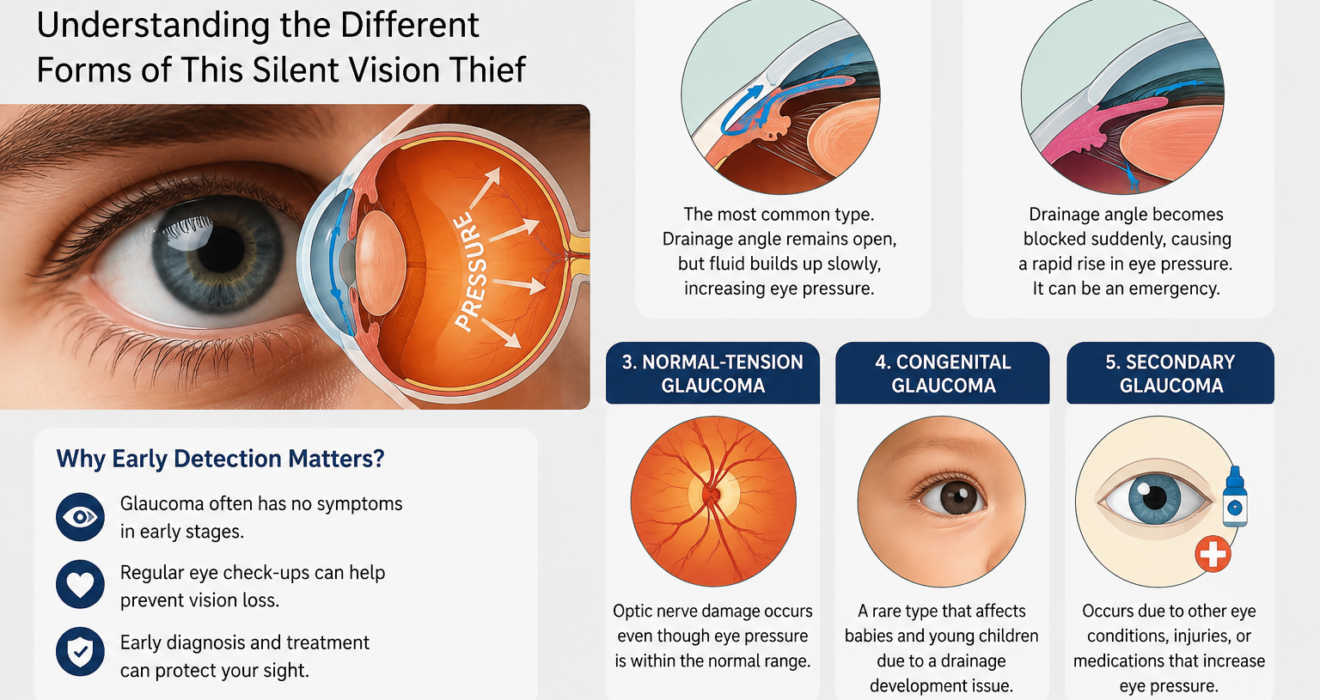
Primary Open-Angle Glaucoma is the most common among all Types of Glaucoma. It occurs when the eye’s drainage system gradually becomes less efficient, causing pressure to build up inside the eye.
Symptoms
- Gradual loss of peripheral vision
- No pain in the early stages
- Slow progression over time
- Vision loss often unnoticed initially
Because this form develops slowly, regular eye examinations are crucial for early diagnosis.
Angle-Closure Glaucoma
Among the more serious Types of Glaucoma, Angle-Closure Glaucoma occurs when the drainage angle of the eye becomes blocked suddenly.
Symptoms
- Severe eye pain
- Sudden blurred vision
- Headache
- Nausea and vomiting
- Halos around lights
This condition is considered a medical emergency and requires immediate treatment to prevent vision loss.
Normal-Tension Glaucoma
Normal-Tension Glaucoma is one of the unique Types of Glaucoma because optic nerve damage occurs even though eye pressure remains within the normal range.
Risk Factors
- Family history of glaucoma
- Poor blood circulation
- Cardiovascular disorders
- Migraine headaches
The exact cause remains unclear, but early detection is essential to preserve vision.
Secondary Glaucoma
Secondary Glaucoma develops as a result of another eye condition, injury, medication, or disease. It is one of the more complex Types of Glaucoma because treatment often involves addressing the underlying cause.
Common Causes
- Eye trauma
- Long-term steroid use
- Eye inflammation
- Advanced cataracts
- Diabetic eye disease
Proper management of the underlying condition can help control glaucoma progression.
Congenital Glaucoma
Congenital Glaucoma is a rare form among the Types of Glaucoma and affects infants and young children due to abnormal eye development.
Symptoms
- Excessive tearing
- Sensitivity to light
- Enlarged eyes
- Cloudy cornea
Early surgical treatment often provides the best outcomes for affected children.
Pigmentary Glaucoma
Pigmentary Glaucoma occurs when pigment particles from the iris block the eye’s drainage channels. It is one of the less common Types of Glaucoma but can lead to increased eye pressure.
Common Signs
- Blurred vision
- Eye discomfort after exercise
- Gradual vision loss
- Increased intraocular pressure
Regular monitoring is essential to prevent optic nerve damage.
Why Early Diagnosis Matters
All Types of Glaucoma can cause permanent vision loss if left untreated. Unfortunately, glaucoma-related vision loss cannot be reversed. Early diagnosis through comprehensive eye examinations allows specialists to begin treatment before significant damage occurs.
Modern glaucoma management may include:
- Prescription eye drops
- Laser treatment
- Minimally invasive glaucoma surgery
- Advanced glaucoma surgery
The appropriate treatment depends on the specific Types of Glaucoma diagnosed.
Conclusion
Understanding the various Types of Glaucoma is essential for protecting long-term vision. From Primary Open-Angle Glaucoma and Angle-Closure Glaucoma to Congenital and Secondary Glaucoma, each condition requires proper diagnosis and personalized treatment.
Because many Types of Glaucoma develop without early symptoms, routine eye examinations remain the most effective way to detect the disease before significant vision loss occurs. Early intervention can help preserve eyesight and improve quality of life.
Protect Your Vision from Glaucoma
Glaucoma often develops without warning signs, making regular eye checkups essential. At Mansarovar Eye Hospital, our experienced eye specialists use advanced diagnostic technology to detect and manage all Types of Glaucoma.
Schedule Your Comprehensive Eye Examination Today and Take the First Step Toward Protecting Your Vision.
Frequently Asked Questions (FAQs)
What are the main Types of Glaucoma?
The main Types of Glaucoma include Primary Open-Angle Glaucomas, Angle-Closure Glaucoma, Normal-Tension Glaucoma, Secondary Glaucoma, Congenital Glaucoma, and Pigmentary Glaucoma.
Which type of glaucoma is most common?
Primary Open-Angle Glaucoma is the most common among all Types of Glaucoma and usually develops gradually without noticeable symptoms.
Can glaucoma be cured?
Glaucoma cannot be completely cured, but early diagnosis and treatment can help control the disease and prevent further vision loss.
Which Types of Glaucoma require emergency treatment?
Angle-Closure Glaucoma is one of the Types of Glaucoma that requires immediate medical attention due to the risk of rapid vision loss.
Are all Types of Glaucoma inherited?
Not all Types of Glaucoma are inherited, but a family history can significantly increase the risk of developing the condition.
How can glaucoma be detected early?
Regular comprehensive eye examinations, including eye pressure measurements and optic nerve evaluation, are the best ways to detect Types of Glaucoma early.